
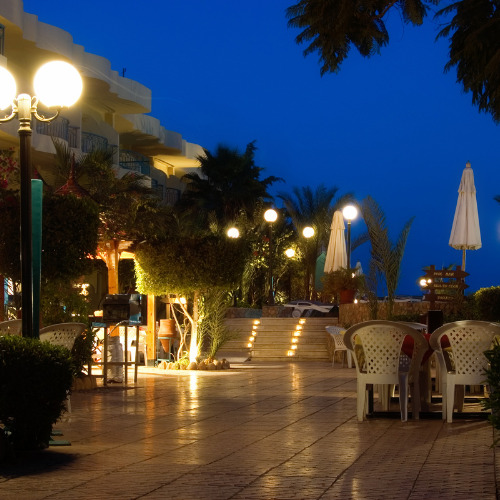
Low Level Lighting for Commercial Buildings
Commercial buildings are home to a diverse array of businesses. Whether it’s class-A office spaces, expansive distribution centers, civic or educational facilities, retail centers, or hospitality destinations, they require a specialized lighting setup.
Choose fixtures with glare control to minimize eye strain and boost productivity. Incorporate dimmers, occupancy sensors, and lighting controls to optimize energy usage in areas with sporadic occupancy.
Safety and Security
A well-lit commercial area not only reduces the risk of a criminal act being committed, it also brings a sense of security to visitors and employees. While residential areas can use low-level motion detected lighting like that found in big box stores, commercial properties need a much more complex system designed by a qualified electrical engineer and requiring professional installation.
Bright lights are important in a commercial setting because they allow people to see their work clearly and avoid eye damage. However, overly bright lighting can actually obstruct vision by creating glare and making it harder to observe one’s surroundings.
For this reason, proper commercial light levels are based on the type of space. The IES recommends specific levels of illumination for different types of spaces, and these can be measured in foot-candles or lux. Foot-candles are the amount of light that falls on a surface, and lux is a measure of how much light is available in a given area.
Energy Savings
Lighting accounts for over 30% of energy consumption in commercial buildings. Fortunately, many solutions can reduce that percentage.
Start by evaluating your space. Decide what level of brightness you want per square foot, and calculate the number of lights needed to achieve that goal. Remember to factor in the light fixture wattage, location and spacing, as well as any other variables that may affect the amount of light that actually makes it onto the surface.
Using programmable timers and dimmers to control your lights can help save energy by automatically turning lights off and on. Daylight harvesting can also minimize the reliance on artificial lighting during daylight hours.
The daily profiles from Figure 11 revealed that in office cases where occupants have very different function types, energy savings potential deviated from those found in the reference case. This can be explained by the fact that in offices with a variety of occupancy patterns, lighting control at desk level tends to remain on for a while after occupants leave their workstations.
Durability
Whether it’s class-A office buildings, expansive distribution centers, civic or educational institutions, retail centers, hospitality destinations or industrial facilities-commercial spaces have unique lighting requirements that can’t be met by residential-grade products. Commercial-grade lighting is manufactured with durability in mind, resulting in longer warranties and the capacity to withstand harsher environments.
Foot candles, fixture wattage, and beam angle are just the beginning of the planning process when choosing the right fixtures for your space. You also need to consider control options that will optimize energy use and provide flexibility for varying levels of occupancy.
LED lights are rapidly becoming the preferred lighting source for commercial and industrial applications, offering significantly lower operating costs than traditional options. These high-performance bulbs feature long lifespans, superior lumen per watt output and a wide range of configurations to meet the specific needs of your facility.
Aesthetics
Commercial lighting provides a unique opportunity to showcase the design of a building and highlight its features after dark. For instance, exterior lighting can be used to showcase monument signage and architecture and spotlight amenity spaces like fountains that can be enjoyed by visitors after hours.
Commercial buildings are not casual environments; they are places where business transactions are conducted, products manufactured, and services provided. It is important for them to convey a sense of professionalism to their clients, and that can be achieved with proper lighting.
For example, recessed troffers and linear LED fixtures can be used to provide ambient lighting, and they should have even light distribution with appropriate brightness levels to avoid glare. You can also use task lighting with adjustable desk lamps to provide focused light for collaborative areas. Another option is full-spectrum lighting, which mimics the appearance of natural daylight to make colors appear rich and vibrant. It is ideal for offices and conference rooms.